In-Line Quality Control: How a 30-Year Factory Prevents Defects Before They Ship
Most content about garment quality control is written from the buyer's side — how to hire a third-party inspector, what AQL sampling means, how to write a defect classification guide. That perspective is useful, but it describes what happens at the end of the process. By the time a third-party inspector arrives at your factory for a pre-shipment inspection, the production run is complete. Finding defects at that stage means rework at best, missed delivery windows at worst.
This article describes quality control from the inside of a factory that has been running in-line QC for decades. The goal is to help buyers understand what good internal QC looks like — so they can ask better questions of their manufacturers before placing orders.
The Difference Between In-Line and Final Inspection
Final inspection (also called pre-shipment inspection or PSI) happens after production is complete. An inspector checks a statistically valid sample of finished garments against your specifications and AQL defect tolerance. If the batch passes, it ships. If it fails, the factory reworks or the shipment is delayed.
In-line inspection happens during production. Quality checkpoints are built into the manufacturing process itself, catching problems at the stage where they are cheapest to fix. A stitching problem caught at the machine costs minutes to correct. The same problem found in 500 finished garments costs days.
The goal of in-line QC is not to catch defects. It is to prevent them from accumulating to a level that can't be corrected without delay. A well-run in-line program means your pre-shipment inspection is boring — because almost nothing fails.
Our Three-Stage QC Process
We run quality checks at three stages in every production order. Here is what each stage covers.
Stage 1 — Incoming Material Inspection
Before a single stitch is sewn, incoming materials are checked against the production approval sample and purchase order specifications. For fabric and yarn: colorfastness, hand feel, weight (grams per square meter or grams per linear meter), width, and shrinkage after washing. For trims: button strength, zipper pull force, label print clarity, heat-transfer adhesion. Any material that fails incoming inspection is flagged before it reaches the production floor.
Stage 2 — Mid-Production (In-Line) Inspection
After the first 10% of a production run is complete, our QC team pulls a sample from the line and measures every critical specification against the sealed production sample. Measurements checked: chest, waist, hip, length, sleeve length, armhole, neck opening, and any style-specific measurements. Construction checked: seam allowance consistency, stitch density (stitches per cm), thread tension, pattern alignment at seams. This inspection happens again at 50% production completion. If defects exceed threshold at either point, production is paused and the root cause is resolved before continuing.
Stage 3 — Pre-Pack Final Check
Every garment is checked individually before packing. A trained inspector examines each piece against a defect classification list specific to that order. Critical defects (holes, wrong color, broken fasteners) result in immediate removal from the shipment. Major defects (stitching skip, measurement out of tolerance by more than 1cm) are assessed against the AQL. Minor defects (light staining that will wash out, slight thread trim excess) are documented. The batch does not proceed to packing until it meets the agreed AQL standard.
One Catch From Our Own Floor
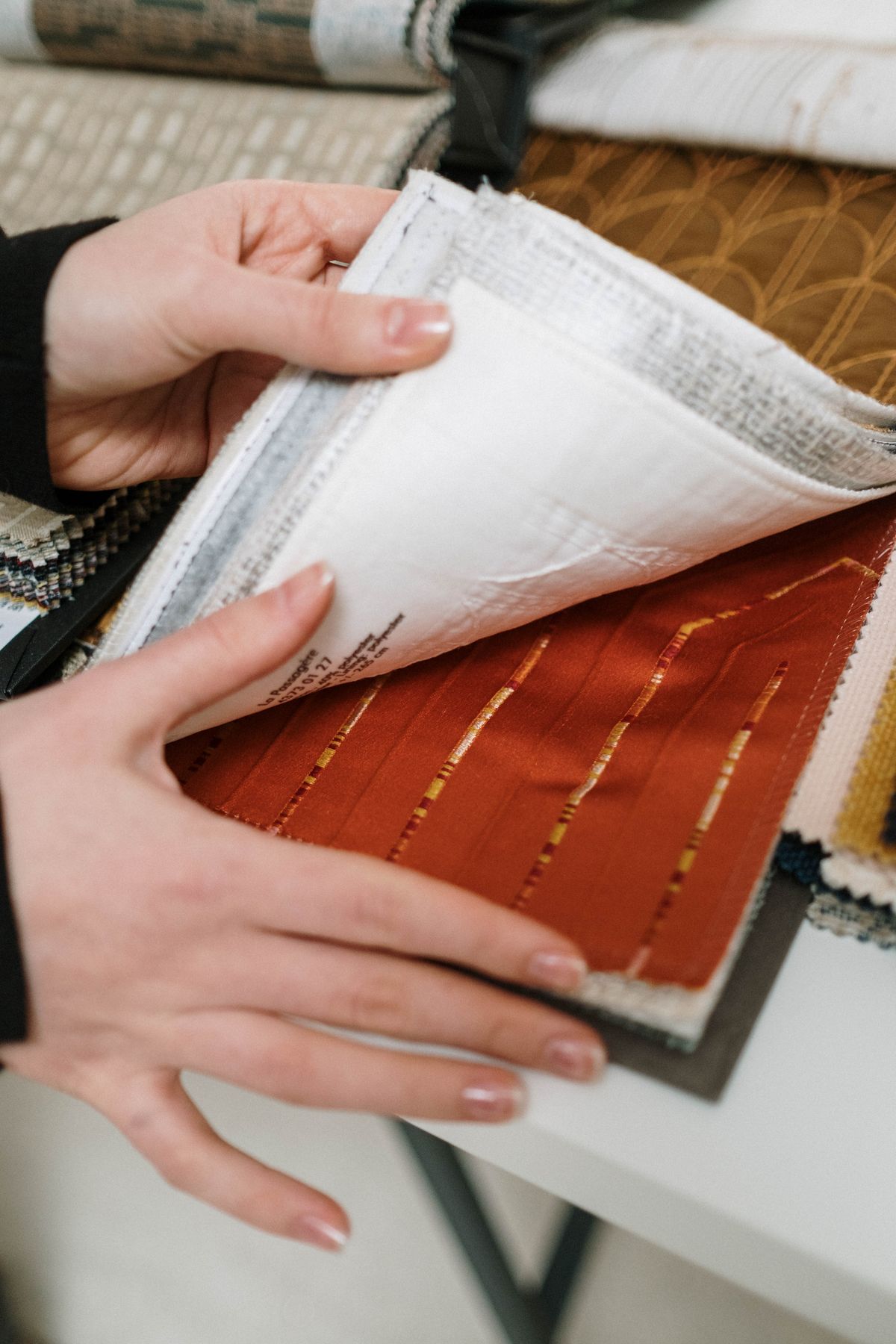
A lot of our Middle East clients order prints with strong vertical lines. On a dress those lines have to run true, meet cleanly where panels join, and sit straight against a row of vertical buttons. It is the most demanding alignment work we do. On one run the lining was not sitting right, and our mid-production check, one of two QC passes we run on every order, caught it before it spread through the batch. We stopped the line, fixed the pattern, walked the workers through the correction, and restarted.
We carried the cost of that fix ourselves. We would rather absorb a pattern correction than ship a dress that hangs wrong, and you only get that choice if someone is inspecting while the garment is still on the floor. After it is boxed, the only options left are rework or a delayed shipment.
What AQL Actually Means in Practice
AQL stands for Acceptable Quality Level. It is a statistical sampling method that defines the maximum defect rate considered acceptable for a production batch. The most common standard in garment manufacturing is AQL 2.5 for major defects, meaning statistically fewer than 2.5% of units should contain major defects.
| AQL Level | Typical Use | What It Means |
|---|---|---|
| AQL 1.0 | Technical garments, medical textiles | Very tight. Less than 1% major defects tolerated. |
| AQL 2.5 | Standard commercial apparel | Industry standard. Approximately 2.5% major defect tolerance. |
| AQL 4.0 | Basic/commodity garments | Looser. Acceptable for low-price-point basics. |
AQL tells you the acceptance/rejection threshold. It does not tell you what to look for. The defect list — a written specification of what constitutes a critical, major, or minor defect for your specific product — is equally important. A broken zipper is obviously critical. Whether a 0.8cm measurement variance is a major or minor defect depends on your product and your customer. This classification should be agreed with your factory before production begins, not discovered during inspection.
What Defects Are Most Common in Knitwear
Knitwear has a different defect profile than woven garments. The most common defects we catch in our in-line process:
- Dropped stitches: A single stitch that unravels creates a run in the fabric. Caught visually during mid-production check. Cause is usually machine needle wear or yarn tension inconsistency.
- Uneven gauge: Slight variations in knit tension create visible bands of looser or tighter fabric. Often a machine calibration issue that becomes obvious across multiple pieces.
- Color shading (side-to-side or end-to-end): The fabric is slightly different in shade from one edge to the other, or from the beginning to end of a roll. Caused by dye lot variation or machine tension changes. Detected during incoming material inspection.
- Linking defects: At the seam where panels are linked together, loose linking or skipped stitches create a visible weakness. Checked during mid-production review.
- Pressing marks: Heavy pressing iron damage on delicate yarns. Caught during pre-pack check. Preventable with the right pressing cloth and temperature setting per yarn type.
- Measurement drift: Measurements that are correct in the first 50 pieces but gradually shift as the production run continues. This is the defect that in-line inspection catches most reliably — final inspection alone would miss it.
The Role of the Sealed Production Sample
A sealed production sample is a physical garment — typically two copies — that has been approved by both buyer and factory as the quality benchmark for the production run. One copy stays at the factory on the production floor. One copy is held by the buyer.
Every quality decision during production is made by reference to the sealed sample. "Does this piece match the sealed sample?" is the only question that matters. This eliminates disputes about what was agreed, prevents gradual quality drift, and gives inspectors (internal and third-party) an unambiguous standard.
If your factory does not maintain a sealed production sample, or cannot show you where their copy is when you ask, that is a significant warning sign.
What to Ask Your Factory About QC
These questions distinguish factories with genuine in-line QC from factories that claim to have it:
- "At what point in production do you perform your first in-line inspection?" The answer should be the first 10-20% of the run. Any later is too late to catch systematic problems efficiently.
- "Who performs your in-line inspections — line supervisors or a dedicated QC team?" Line supervisors have an incentive to keep production moving. A dedicated QC team that reports to management, not the production line, produces more reliable results.
- "Can you show me your defect log from a recent production order?" A factory that runs genuine QC keeps records. If they cannot produce one, they are not running the process they describe.
- "What happens when in-line inspection finds defects above your threshold?" The answer should describe a specific process — halt, root cause analysis, corrective action, re-inspection. Vague answers suggest the process does not exist in practice.
- "Do you keep the sealed production sample on the floor or in an office?" It should be on the floor, accessible to line operators and QC staff. An office sample that no one looks at is decorative, not functional.
How Third-Party Inspection Fits In
Third-party inspection is not a substitute for factory in-line QC. It is an independent verification layer. If your factory runs rigorous in-line QC, third-party inspection should confirm what you already expect: a clean batch, no surprises.
Third-party inspection becomes most valuable when:
- You are working with a new factory for the first time
- The order is large enough that a failed inspection would be commercially significant
- You are producing a technically complex garment with many critical specifications
- You cannot visit the factory yourself during production
BSCI certification (audited by TUV Rheinland), which NewWay holds, requires documented social compliance and quality management processes that are independently verified. It is one way buyers can have confidence in a factory's standards before placing their first order.
Quality You Can Verify
We welcome buyer visits during production and provide mid-production QC reports on request. Our BSCI and GRS certifications document the standards we hold ourselves to — not just the ones we describe to buyers.
Discuss Your QC Requirements →