A Rushed Basketball Training Camp Order That Grew to 1,000 Pieces per Season
An anonymous professional basketball player needed branded training apparel in less than three weeks. The first 100 pieces reached his Shanghai camp on time, exposed the risk of skipping a sample, and became the pilot for recurring seasonal production.
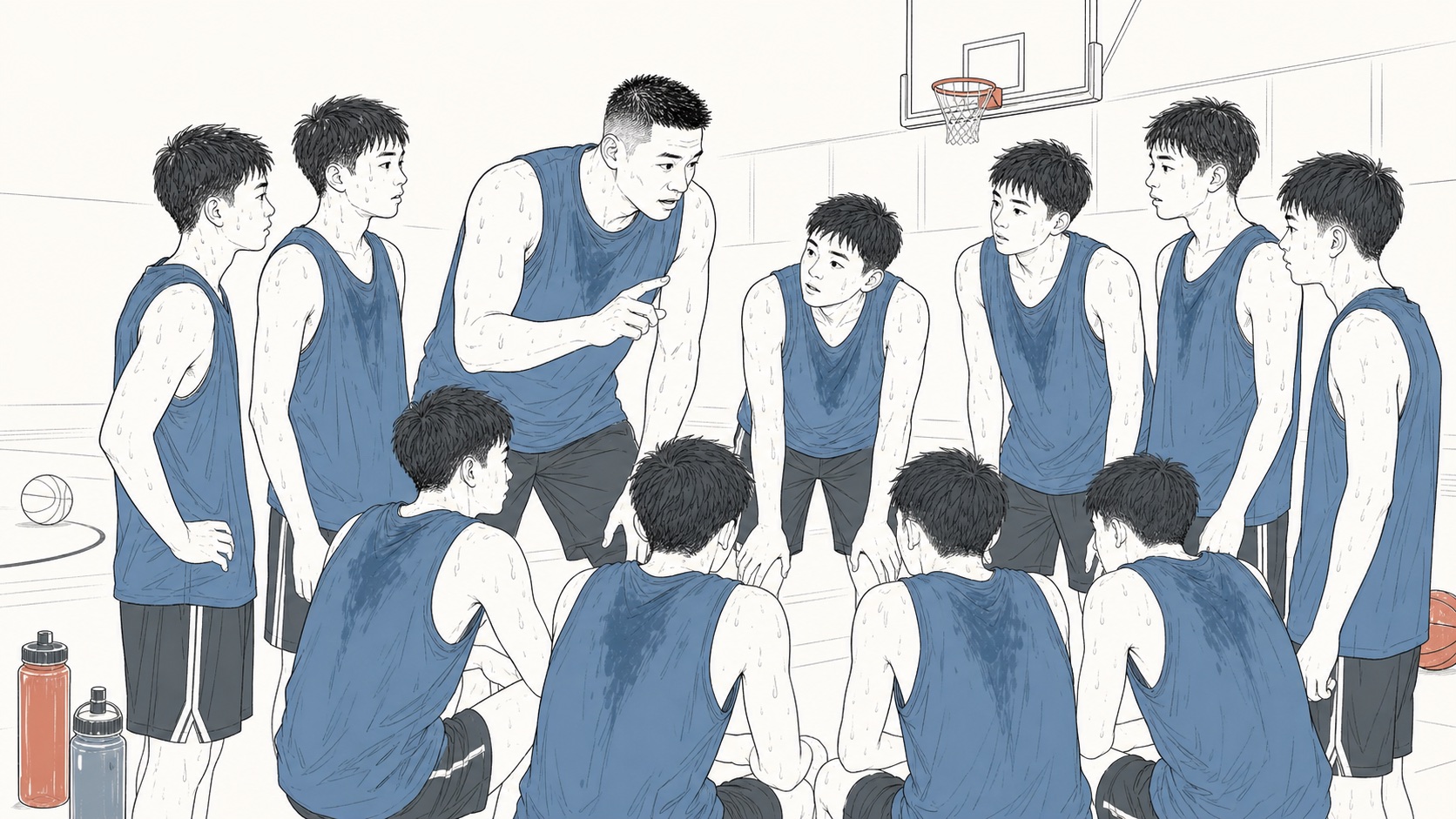
A professional basketball player competing in China was preparing a basketball training camp in Shanghai. He also had a large social media audience, so the clothing had two jobs. It needed to give the camp a clear visual identity and work during serious basketball training.
The production request arrived less than three weeks before the camp. He needed 50 T-shirts and 50 training tanks carrying his logo and event graphics. He had finished artwork and a fixed date. He did not have a production manager, approved fabric, garment patterns, or a physical sample.
We told him that skipping the sample was risky. Then we got to work.
Three weeks to turn artwork into sportswear
The artwork was only one part of the product. Someone still had to decide how the garments should fit, which fabric could handle basketball, how the logo should be printed, and how all those decisions would work together.
A normal development cycle would answer those questions through a sample. We would source several fabrics, send swatches for hand-feel approval, make one garment, collect comments, and correct it before production.
The basketball training camp date left no room for that sequence. The customer understood the risk and approved a 100-piece run. That run had to serve two jobs: clothing for the event and the first physical test of the product.
The honest version: NewWay completed development and production in less than three weeks and delivered one day before the camp. We would not recommend the same schedule to another customer starting from scratch.
Finding comparable performance fabrics
The customer referenced Lululemon fabrics. We could study the hand feel, stretch, weight, texture, and function of the reference garments, but we could not promise an identical proprietary material.
For the training tank, our fabric network found a polyester, nylon, and spandex blend with the stretch and surface pattern he wanted. The T-shirt needed a harder-to-source fabric using COOLMAX and LYCRA technologies. The LYCRA Company describes COOLMAX as a moisture-management technology rather than a finished fabric, so we still had to judge the full blend and construction.
NewWay works with fabric suppliers across the Zhejiang textile network. That access shortened the search, but access was only the starting point. The fabric still needed to suit basketball, casual wear, printing, and an unusually small first order.
Why we recommended the less expensive print
The original design specified a high-density rubber print, a screen-printing method that creates a thick, raised graphic. It costs more than a thinner standard rubber print.
Our sampling team advised against it. A thick ink layer can reduce stretch and trap more heat across the printed area. That trade-off made little sense on a tank or T-shirt worn during basketball, where the garment needs to move, breathe, and tolerate contact.
| Print option | Advantage | Concern for basketball |
|---|---|---|
| High-density rubber print | Thick, raised graphic | Less stretch and more heat across the printed area |
| Thinner standard rubber print | Flexible, comfortable, durable | Less dimensional than a raised print |
We recommended the thinner print. It cost less, but price did not drive the decision. The thinner print gave the logo enough presence without fighting the fabric every time the player moved.
The two details we missed
The fabric, print, and garment function performed well at the basketball training camp. The visual review exposed two details that the digital files had not settled.
The main logo sat higher on the body than the customer expected. We had followed the supplied placement measurements. Once he wore the garment, the difference between a correct measurement and the preferred visual position became obvious.
The training top also included a small three-line knitted detail at the shoulder, borrowed from the reference garment. The customer did not want that detail on his own product.
Neither problem ruined the order. Both would have surfaced during an ordinary sample review. We do not blame the designer or the customer. Everyone approved decisions without seeing the finished garment because the deadline removed the normal checkpoint. The factory met the date, but speed transferred sampling risk into the first production run.
The training camp order became the pilot
After the camp, we moved the print, removed the shoulder detail, and carried the approved fabric and print decisions into commercial production.
The next order reached 300 pieces per style. Production has since grown to about 1,000 pieces per season across three to four styles.
The customer has chosen controlled repeat runs instead of buying a large amount of inventory at once. That gives him room to respond to demand while NewWay preserves the approved patterns, fabrics, printing, and quality requirements from one order to the next.
We do not know his revenue or sell-through rate. Consistent reorders are the result we can verify, so they are the result we report.
How long does it take to manufacture custom clothing?
For a new athletic product, we recommend at least two months from final design direction to delivery. Eight weeks is a working minimum. It gives the customer time to touch the fabric, wear the sample, and change a decision before that decision appears on hundreds of garments.
- Fabric sourcingAbout two weeks to compare five or six options and approve hand feel.
- Physical sampleAbout two weeks to make and deliver the first garment.
- ReviewTime to correct fit, print placement, construction, or fabric direction.
- ProductionAbout three weeks for a small batch or four weeks above 1,000 pieces.
Fabric alone can use a month. Once a founder touches the first swatches, the brief may change. A heavier knit, firmer recovery, or different surface can send the sourcing team through a second round.
Shipping adds another variable. Samples may reach Los Angeles in three to four days. Other destinations can lose more than a week to customs. A China-based third-party logistics partner may receive the same package in one or two days.
What this project changed for us
The first order proved that NewWay could execute under pressure. It also proved that execution speed cannot replace product approval.
For another custom basketball apparel project, we would use the full sample cycle: compare fabrics, approve the print at its real size, wear the garment, adjust it, and then authorize production. A controlled first run can still test demand, but it should follow a sample rather than become one.
Source note
- Project quantities, timeline, decisions, and outcomes: NewWay production records and Ray Wang interview, June 2026.
- The LYCRA Company: About COOLMAX technology.
Developing custom basketball or training apparel?
Bring your design direction at least two months before delivery. NewWay can help with fabrics, printing, patterns, samples, and a production plan that fits your stage.
Discuss Your Project