No agents. No directories. Real numbers from a factory that has been making clothes in Zhejiang for 30 years.

A line-by-line FOB price breakdown per piece — fabric, trims, labour, overhead and margin, laid bare.

$369B activewear market at 9.92% CAGR, extended-size grading pitfalls, 100–300 unit MOQs.

The real economics behind MOQ, and exactly which levers move the number without losing quality.
Send your designs and target quantities. We'll respond with an honest quote and tiered pricing so you can plan with real numbers.
Request a Quote →Minimum order quantity is the first wall most small brands hit when they start sourcing — and the most misunderstood number in the entire process.
Across 40+ verified data points, this guide breaks down what MOQ really looks like by garment type, why the number exists, and the specific levers that move it. Most advice on this topic comes from consultants. This comes from the factory floor.

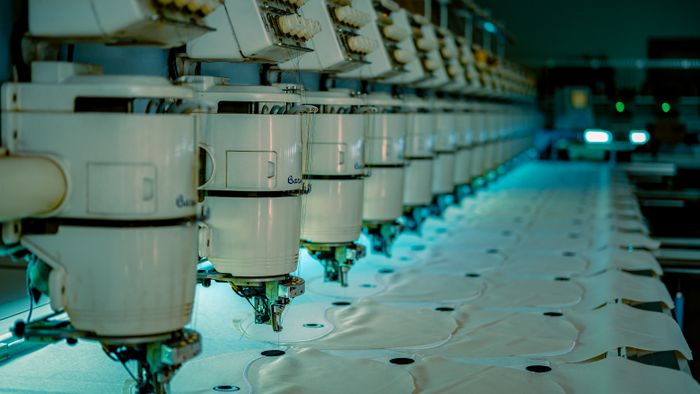
MOQ is not arbitrary. It is the minimum order at which a factory can produce your garment profitably. Pattern making, machine setup, fabric minimums, and QC overhead are fixed whether you order 100 pieces or 1,000.
The most important question is not "what is your MOQ?" — it's "what does my unit price look like at 150 versus 300 pieces?"
| Category | Typical MOQ | Binding constraint |
|---|---|---|
| Basic woven tops | 100–300 pcs | Cuts efficiently small |
| Cut-and-sew knitwear | 150–300 pcs | Yarn min per color |
| Printed woven | 200–500 pcs | Print yard minimums |
| Jacquard knitwear | 300–600 pcs | Machine changeover |
Successful negotiation means offering something in return for flexibility: a higher unit price, a larger deposit, stock fabrics, style consolidation, or a clearly demonstrated reorder plan. Each gives the factory a real reason to say yes.